

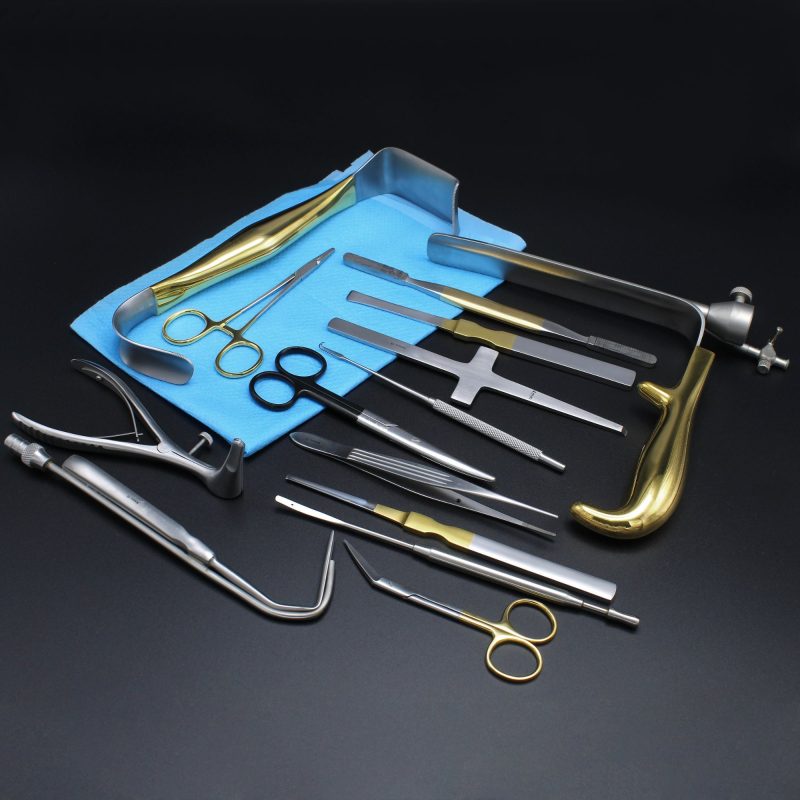
Plastic surgery depends on precision, consistency, and careful tissue handling, making the selection of surgical instruments an important part of clinical practice. Plastic surgery instruments encompass a broad range of specialized tools designed to support tasks such as tissue manipulation, cutting, grasping, suturing, and maintaining a clear operative field. Their design can influence how effectively surgeons perform delicate procedures and manage different stages of an operation.
What Are Plastic Surgery Instruments?
Plastic surgery instruments are specialized surgical tools used in reconstructive and aesthetic procedures. They include instruments designed for grasping tissue, making precise incisions, controlling bleeding, placing sutures, and performing other technical tasks required during surgery.
Unlike general-purpose equipment, many plastic surgery instruments are designed with precision and fine tissue handling in mind. Procedures involving delicate anatomical structures may require instruments with particular tip shapes, handle designs, lengths, or levels of control.
Common categories include surgical scissors, forceps, needle holders, retractors, clamps, and surgical handles. Within each category, instruments can vary considerably depending on their intended application.
For example, forceps may be designed with fine tips for precise tissue handling, while retractors can help provide visibility and access to the operative area. Needle holders are designed to provide controlled handling of surgical needles during suturing.
The appropriate instrument depends on the procedure, surgeon preference, tissue characteristics, and operating environment. As a result, understanding the differences between instrument designs is important when developing or maintaining a professional surgical instrument collection.
Key Characteristics of Plastic Surgery Instruments
Precision is one of the most important characteristics of instruments used in plastic surgery. Fine tips, controlled movement, and appropriately balanced handles can help surgeons perform delicate tasks with greater consistency.
Material quality is another consideration. Surgical instruments are commonly manufactured from stainless steel and other materials selected for strength, corrosion resistance, durability, and compatibility with cleaning and sterilization processes.
The finish of an instrument can also matter. A smooth, well-maintained surface can make cleaning and inspection easier, while appropriate construction helps the instrument withstand repeated use when it is designed for reuse.
Ergonomics should not be overlooked. Surgeons may use instruments repeatedly throughout a procedure, so handle shape, weight, balance, and grip can influence comfort and control.
Instrument integrity is equally important. Hinges should move appropriately, cutting edges should perform as intended, and tips should align correctly. Routine inspection can help identify wear or damage before an instrument is returned to clinical use.
These characteristics work together rather than independently. A highly precise instrument still needs appropriate durability, while a durable instrument may not be suitable for a task requiring extremely fine control.
How Plastic Surgery Instruments Support Surgical Work
Surgical instruments provide the physical means for performing many of the controlled actions required during an operation. Depending on the instrument, these actions can include cutting, grasping, separating, retracting, holding, clamping, or suturing tissue.
Scissors, for instance, are used for controlled cutting and may have different blade configurations depending on the intended task. Forceps provide controlled handling of tissue or other materials, with variations in tip design allowing instruments to be selected for different requirements.
Needle holders serve a different purpose by allowing surgeons to manipulate surgical needles during closure. Their design provides a stable grip that supports controlled needle movement.
Retractors help maintain exposure by holding tissue away from the operative area. This can provide the visibility and access necessary for a surgeon to work accurately.
The instruments themselves do not determine the outcome of a procedure. They are tools used by trained medical professionals within a larger surgical system that includes patient assessment, surgical technique, sterile practices, anesthesia, postoperative care, and clinical decision-making.
Types of Plastic Surgery Instruments
A professional collection of plastic surgery instruments can contain many different categories, each serving a particular function.
Forceps are among the most recognizable surgical instruments. They are available in numerous shapes and configurations, including designs intended for delicate tissue handling or more secure grasping.
Scissors are used for cutting tissue, sutures, dressings, or other materials, depending on their design. Straight and curved versions, as well as different blade configurations, can provide different levels of access and control.
Needle holders are designed specifically for handling surgical needles during suturing. Their jaws provide a controlled grip that allows the surgeon to position and guide the needle.
Retractors are used to maintain exposure of the surgical field. They may be handheld or designed to remain positioned during a procedure, with different shapes serving different anatomical requirements.
Clamps and hemostatic instruments can be used to grasp or temporarily control tissue and vessels as appropriate. Their size, jaw configuration, and locking mechanisms vary according to their intended application.
Scalpels and surgical handles provide controlled support for cutting instruments. The handle and blade combination can be selected according to the precision and access required for a particular task.
Together, these categories form part of the broader surgical instrument ecosystem used in modern operating environments.
Selecting the Right Surgical Instruments
Selecting surgical instruments involves more than choosing the most specialized-looking tool. Healthcare organizations and surgical professionals need to consider intended use, construction, compatibility with sterilization processes, ergonomics, durability, and instrument maintenance.
The first consideration should be the intended application. An instrument designed for delicate tissue manipulation may not be appropriate for a task requiring stronger grasping force. Similarly, scissors designed for cutting sutures are not necessarily interchangeable with instruments intended for precise tissue dissection.
Material should also be evaluated. Stainless steel is widely used because it can offer a combination of strength, corrosion resistance, and suitability for repeated cleaning and sterilization when properly maintained.
Ergonomics can become increasingly important when instruments are used frequently. Handles that provide reliable control and appropriate balance can support consistent instrument handling throughout a procedure.
Healthcare facilities should also consider the instrument’s maintenance requirements. Reusable instruments need appropriate cleaning, inspection, sterilization, storage, and handling according to applicable clinical protocols and manufacturer instructions.
For facilities reviewing their surgical equipment inventory, a specialized supplier such as Black & Black Surgical can provide a range of plastic surgery instruments and other surgical instrument categories for professional applications.
Maintaining Plastic Surgery Instruments
Proper maintenance is essential for preserving the performance and service life of surgical instruments. Cleaning should take place according to established clinical protocols and the manufacturer’s instructions, with particular attention paid to hinges, joints, serrations, and other areas where residue can accumulate.
Inspection is another important part of instrument management. Staff should look for corrosion, cracks, misalignment, damaged tips, worn cutting edges, and other signs that an instrument may no longer function correctly.
Moving components may require appropriate maintenance according to manufacturer recommendations. Instruments should not be forced open or closed if resistance or mechanical problems are present, as this can contribute to additional damage.
Sterilization must follow the applicable healthcare facility procedures and the instrument manufacturer’s validated instructions. Different instruments and materials may have specific requirements, so a general assumption should not replace documented processing guidance.
Storage also matters. Instruments should be protected from unnecessary impact, moisture, contamination, and other conditions that could compromise their condition.
A consistent maintenance process can help healthcare facilities identify problems early and ensure that instruments available for clinical use meet the organization’s standards.
Plastic Surgery Instruments and Surgical Precision
The relationship between instruments and surgical precision is particularly relevant in procedures involving small anatomical structures or delicate tissue. Instrument design can affect how easily a surgeon can control movement, apply pressure, and access a particular area.
However, precision does not come from equipment alone. Surgical training, experience, procedural planning, patient-specific considerations, sterile technique, and clinical judgment all contribute to safe and effective surgical practice.
The role of instrument selection is therefore best understood as part of a larger system. The right instrument provides the physical capabilities required for a particular task, while the trained professional determines how and when it should be used.
As surgical techniques continue to develop, instrument manufacturers and suppliers may also introduce designs intended to improve ergonomics, control, visibility, and efficiency. Even so, established instrument categories remain fundamental to many operating-room environments.
Frequently Asked Questions
What are plastic surgery instruments?
Plastic surgery instruments are specialized surgical tools used during aesthetic and reconstructive procedures. Common examples include forceps, scissors, needle holders, retractors, clamps, and surgical handles.
What materials are commonly used for surgical instruments?
Stainless steel is widely used because it can provide strength, corrosion resistance, and durability. The appropriate material depends on the instrument’s intended use and the manufacturer’s specifications.
Why is instrument design important in plastic surgery?
Design can influence precision, control, access, and tissue handling. Features such as tip shape, handle configuration, weight, and balance can make an instrument more suitable for a particular surgical task.
How should surgical instruments be maintained?
Reusable surgical instruments should be cleaned, inspected, sterilized, and stored according to applicable healthcare protocols and manufacturer instructions. Particular attention should be given to hinges, cutting edges, tips, and other functional components.
Are all surgical forceps the same?
No. Forceps vary in size, shape, tip configuration, and intended application. Different designs provide different levels of grip and control for different surgical tasks.
What is the purpose of a surgical needle holder?
A needle holder is designed to securely hold and manipulate a surgical needle during suturing. Its jaws and handle are engineered to provide controlled movement during needle placement.
Why are surgical instruments inspected before use?
Inspection can identify problems such as corrosion, damaged tips, misalignment, worn cutting edges, or mechanical issues. Identifying these problems before use helps ensure that instruments are functioning as intended.
Where can professionals find plastic surgery instruments?
Professional medical-surgical suppliers can provide different categories of surgical instruments and help facilities identify products according to their intended applications. Black & Black Surgical, for example, offers a selection of surgical instruments for professional use.
