

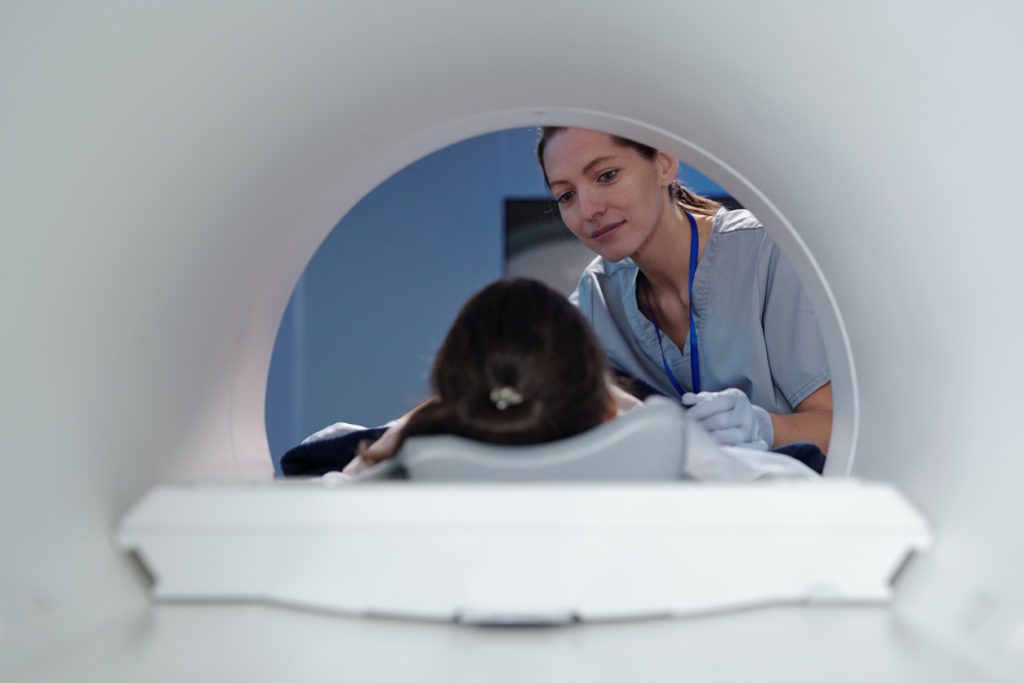
Magnetic Resonance Imaging (MRI) scans are common in medical care, but many patients still arrive with questions shaped by things they have heard from friends, online posts or past experiences. Some worries are understandable, especially when the appointment involves a large machine, loud sounds and strict safety questions. Kasey McKillip is a seasoned MRI technologist with over a decade of hands-on experience in medical imaging who regularly helps patients understand what is true and what is not in an effort to make the experience feel less confusing.
Myths about MRI scans often grow from fear of the unknown. Patients may wonder whether the scan hurts, whether the machine uses radiation, or whether metal anywhere in the body means the exam cannot happen. Clear information helps patients prepare with more confidence and speak up about concerns before the scan begins.
Myth: MRI Scans Use Radiation
One of the most common myths is that MRI scans use radiation. MRI stands for magnetic resonance imaging. It uses a strong magnetic field and radio waves to create detailed pictures inside the body. It does not use X-rays or ionizing radiation, which makes it different from CT scans and standard X-rays.
This does not mean MRI safety screening is optional. The magnet is powerful, so patients still need to answer questions about implants, devices, and possible metal exposure. Even small details, such as prior surgeries or workplace exposure to metal fragments, can matter before entering the scan room. Screening helps the care team confirm that the exam can be completed safely and without unnecessary delays. It also gives patients a chance to ask questions and feel more prepared before the scan begins.
Myth: Every MRI Requires Contrast Dye
Not every MRI uses contrast dye. Some exams can capture the needed images without it. When contrast is used, it is often given through an IV to help certain tissues, blood vessels or areas of concern show more clearly. The decision depends on the body part being scanned and the medical question behind the exam.
Patients should ask before the appointment whether contrast is expected. They should also share information about kidney disease, pregnancy, allergies, or prior reactions to contrast. This does not mean contrast is unsafe for everyone. It means the imaging team needs the right details to decide what is appropriate for the patient.
Myth: The Scan Is Painful
An MRI scan itself should not be painful. The machine takes images while the patient lies still on a table. There are no incisions, and the scanner does not painfully touch the body. Some patients may feel discomfort from holding a position, lying on a firm table, or dealing with an existing injury.
The technologist can often help with cushions, pads, blankets, or small positioning adjustments. Patients should speak up before the scan starts if a position feels hard to hold. Once images are being taken, movement can affect the scan, so comfort matters before the table moves into place.
Myth: Claustrophobia Means the Exam Is Impossible
Many patients worry that claustrophobia means they cannot complete an MRI. Tight spaces can be difficult, and that fear should not be brushed aside. Still, many patients with anxiety about enclosed spaces are able to complete the exam with preparation, communication, and support from the imaging team.
Patients can talk with the ordering provider or imaging center before the appointment about options. Some facilities may offer music, eye coverings, wider scanners, or medication ordered by a physician when needed. Kasey McKillip highlights the value of calm explanation, practical comfort steps, and steady communication during moments that feel stressful.
Myth: Metal Anywhere Means No MRI
Having metal in your body does not always mean you cannot have an MRI. What matters is the type of metal, where it is, and whether it is safe around the scanner’s strong magnet. Some implants and devices need special review, while others can be scanned under specific guidelines. The imaging team can only make that call if they have accurate information before the exam.
That is why the safety questions are detailed. Patients should mention pacemakers, aneurysm clips, cochlear implants, surgical hardware, past eye injuries involving metal, shrapnel, medication patches, and any implanted device. It is okay if you are not sure whether something matters. Bring it up anyway. Sharing too much information is better than leaving out a detail the team needs to know.
Myth: MRI Scans Are the Same for Everyone
MRI scans are not one size fits all. The length of the appointment, the area being scanned, and whether contrast is used depend on what the provider needs the images to show. A knee MRI, a brain MRI, and a scan used to monitor an existing condition can each follow a different plan.
That is why another person’s MRI experience is not always a good guide for yours. One patient may be done quickly, while another needs more images or a longer exam. One scan may use contrast, while another does not. The best way to prepare is to ask your imaging center what to expect for your specific appointment.
Myth: Patients Cannot Ask Questions
Some patients worry that asking questions will slow things down or bother the staff. During an MRI, that is not how the appointment is supposed to work. Technologists need to know if a patient is anxious, in pain, having trouble lying flat, or unsure about what will happen during the scan. Speaking up early can help the technologist explain the process and make small adjustments before the images begin.
Questions about the sounds, positioning, timing, or call button are also normal. A patient does not need to pretend they are fine or stay quiet just because the department is busy. The more clearly the technologist understands what the patient is feeling, the easier it is to guide the scan in a way that supports comfort and image quality.
Replacing Fear with Better Information
An MRI can feel intimidating when patients only have bits and pieces of information to work from. One person says contrast is always used. Another says metal means the scan cannot happen. Someone else remembers the machine being loud or the space feeling tight. Those details can sound alarming without the right context.
The best preparation is a direct conversation with the imaging team. Patients should share their medical history, ask what the scan will involve, and mention anything that could make the appointment harder, including anxiety, pain, or trouble lying still. Most concerns are easier to address before the scan begins. With accurate information and clear communication, patients can walk into the appointment knowing what matters, what does not, and what questions are worth asking.
