

The modern smile is no longer planned solely through mirrors, moulds and clinical intuition. Across Australia, dentistry is entering an era where digital technology can connect diagnosis, treatment planning, clinical decision-making and patient expectations with remarkable precision. The result is more than a collection of sophisticated machines. It is a new philosophy of care—one in which information travels seamlessly between technology, dentist and patient to create treatment that is increasingly precise, predictable and personalised.
This transformation is particularly evident in the growth of digital dentistry. Intraoral scanners, three-dimensional imaging, computer-aided design and manufacturing, digital treatment simulations and advanced diagnostic software are reshaping how dental professionals understand the mouth. Instead of relying exclusively on traditional impressions and two-dimensional images, clinicians can now construct highly detailed digital representations of a patient’s oral structures.
That digital picture becomes a foundation for better conversations.
From Impressions to Information
Traditional dental impressions have served dentistry for generations, but digital scanning offers an alternative that can be faster, more comfortable and highly detailed. An intraoral scanner can capture the contours of teeth and surrounding structures and transform them into a three-dimensional digital model.
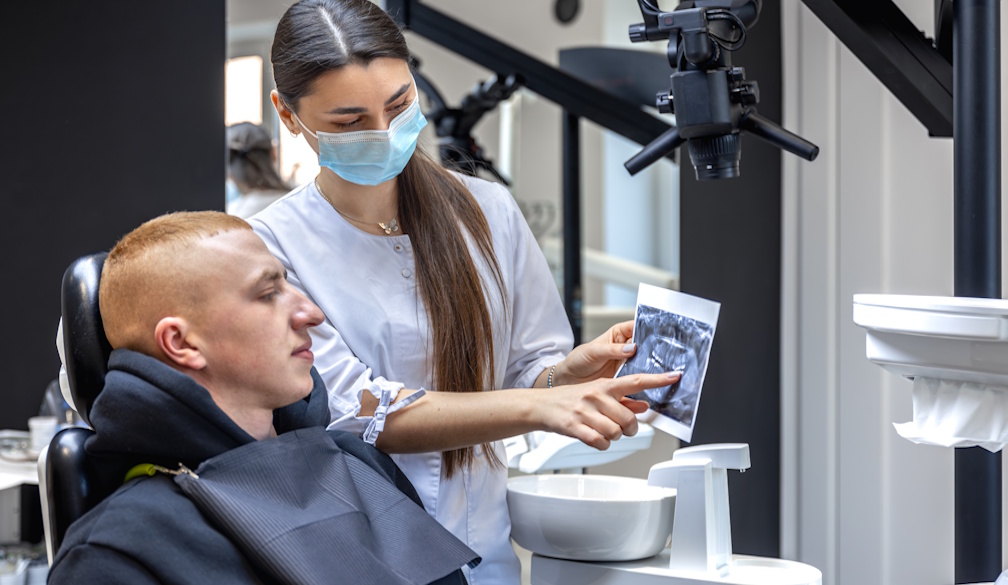
For patients, the significance extends beyond convenience. A digital model can help explain what a dentist sees clinically. Rather than simply being told that a tooth requires restoration or that alignment could be improved, patients may be able to visualise aspects of their existing dental condition and understand how proposed treatment fits into the broader picture.
Technology, in this sense, becomes a translator between clinical knowledge and patient understanding.
Three-dimensional imaging adds another layer. Cone beam computed tomography, where clinically appropriate, can provide detailed information about dental and maxillofacial structures. This can be particularly valuable when planning complex procedures such as dental implant placement, where understanding anatomy and available bone is essential.
The Rise of the Predictable Smile
Few developments illustrate dentistry’s movement towards personalisation more clearly than digital smile design.
Rather than approaching cosmetic dentistry as a purely visual exercise, digital planning can combine facial proportions, tooth dimensions, photographs, scans and treatment objectives to create a more comprehensive representation of the proposed outcome. The philosophy is important: the goal is not simply to create technically perfect teeth, but to consider how a smile relates to an individual’s facial characteristics, expression and expectations.
This can fundamentally change the consultation.
Patients can become participants in the design conversation rather than passive recipients of a predetermined treatment plan. Dentists can explore proportions, tooth shape and other aesthetic considerations before treatment begins, allowing expectations to be discussed earlier.
Yet personalisation should never mean sacrificing biology for aesthetics. Sound digital dentistry remains grounded in fundamental principles of oral health, function, periodontal stability, tooth structure and long-term maintenance. The most impressive digital simulation has little value if the underlying treatment is clinically inappropriate.
Technology Behind the Chair
The connected dental practice is also changing how treatment is delivered.
CAD/CAM technology allows dental restorations to be digitally designed and, in suitable circumstances, manufactured with considerable efficiency. Modern workflows can connect scanning, design and fabrication, reducing some of the manual stages associated with conventional laboratory processes.
This does not eliminate the expertise of the dentist or dental technician. Instead, it changes where that expertise is applied. Professionals increasingly interpret digital information, refine designs and make clinical decisions rather than simply managing physical impressions and conventional models.
Artificial intelligence is also beginning to influence dental workflows, particularly in areas such as image analysis, pattern recognition and administrative processes. However, AI should be regarded as an assistive technology rather than a replacement for professional judgement. Dentistry involves biological variation, patient preferences and clinical circumstances that cannot always be reduced to a digital prediction.
A More Connected Patient Experience
Perhaps the most meaningful advancement is not technological at all—it is relational.
Digital dentistry can give patients a clearer understanding of their treatment journey. Images, scans and simulations can make invisible clinical concepts easier to see. This can encourage more informed discussions about options, limitations, costs, maintenance and expected outcomes.
The connected smile therefore represents more than interconnected devices. It represents interconnected decisions.
When diagnostic information can flow into treatment planning and treatment planning can be communicated visually to the patient, dentistry becomes less fragmented. Each stage can contribute to a more coherent understanding of the individual sitting in the dental chair.
For Australian patients, this matters in a healthcare environment where expectations around convenience, transparency and personalised services continue to evolve. Technology can help dental practices respond to those expectations while maintaining the clinical foundations that have always defined quality dentistry.
Precision With Purpose
There is, however, an important distinction between adopting technology and using technology intelligently.
A scanner does not automatically create better dentistry. A digital smile simulation does not guarantee a successful cosmetic result. More data does not necessarily mean better decisions.
The real value of digital dentistry lies in how intelligently information is interpreted and applied.
The future will likely belong to practices that combine technological capability with clinical experience, ethical decision-making and genuine communication. Digital tools can increase precision, but dentists provide the context. Software can visualise possibilities, but patients ultimately decide what matters to them.
That balance is what makes digital dentistry compelling.
The connected smile is not a vision of dentistry becoming colder, more automated or less human. Paradoxically, the right technology may allow dentistry to become more human by giving clinicians better information and patients greater involvement in decisions about their own care.
As Australia’s dental landscape continues to evolve, the most meaningful innovation will not simply be measured by faster scans, sharper images or smarter software. It will be measured by whether technology helps people receive care that is more thoughtful, more predictable and more closely aligned with their individual needs.
Ultimately, that is where digital dentistry finds its greatest purpose: not in replacing the human touch, but in raising the standard of oral care through a more connected, precise and personalised approach to every smile.
