

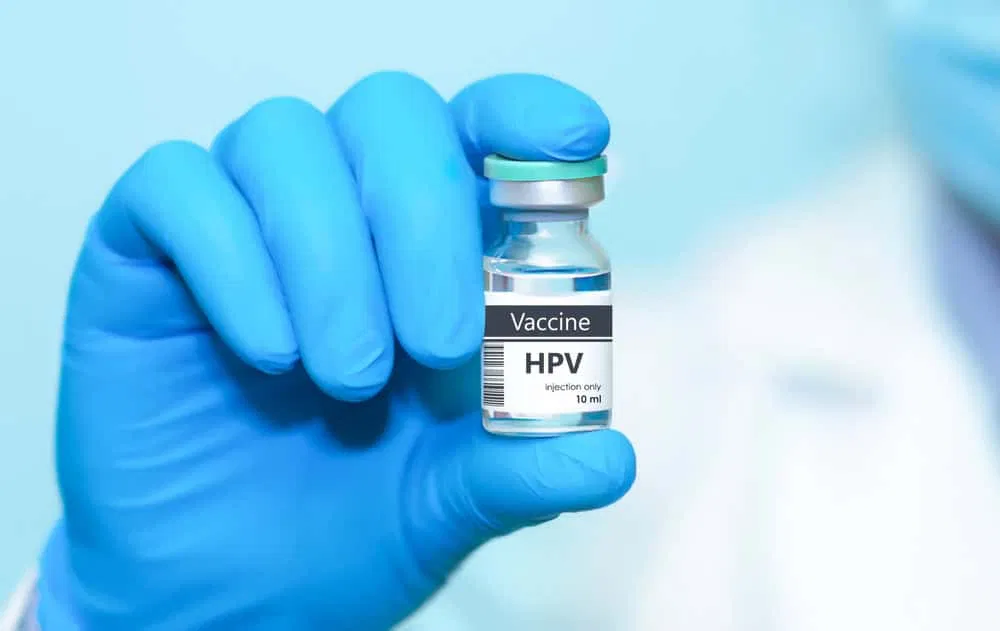
For two decades, the HPV vaccine has been positioned as “for girls before they’re sexually active.” That message was technically right but practically too narrow, and it has cost a generation of Indian women a vaccine they could still have benefited from.
In 2018, the FDA and most international bodies expanded HPV vaccine eligibility to age 45. Indian guidelines have followed, and Cervavac, India’s domestically produced quadrivalent HPV vaccine, became available in 2023 with a price point that put adult vaccination within reach.
The question for Indian women today is no longer “Am I too old?” It is “Will it still help me?” For a substantial fraction of women between 26 and 45, the answer is yes.
Quick refresher: what HPV does
HPV, human papillomavirus, is a family of viruses transmitted through sexual contact. Most strains cause no symptoms and clear on their own within two years. A small number of high-risk strains, particularly HPV 16 and 18, can cause persistent infection that, over 10–20 years, progresses through pre-cancerous changes to cervical cancer. The same viruses also cause a meaningful fraction of vulval, vaginal, anal, and oropharyngeal cancers.
The HPV vaccine doesn’t treat existing infection. It prevents future infection with the specific strains it covers. That’s why timing matters.
Who clearly benefits from vaccination at any adult age
There are four groups where the case for HPV vaccination after 26 is straightforwardly strong:
- Women who have never been sexually active. Whatever the age, if exposure hasn’t happened, the vaccine prevents future exposure. The chronological age is irrelevant.
- Women with limited prior sexual exposure. A small number of lifetime partners means a low cumulative probability of having encountered the high-risk strains. Vaccination still provides protection against the strains you haven’t met yet.
- Women entering a new long-term relationship. A new partner brings a new set of potential exposures. Vaccinating before that exposure makes sense regardless of age.
- Women whose previous Pap smears or HPV tests have been negative. Negative results don’t guarantee absence of all strains, but they substantially reduce the probability of established high-risk infection and improve the expected benefit of vaccination.
In all four groups, the vaccine offers measurable protection. The number-needed-to-vaccinate to prevent one future case of cervical cancer is higher than in pre-teens, but still meaningful, and the cost has dropped enough that the calculation works.
Who may benefit less, and why
The vaccine is less likely to be helpful, though not harmful, in:
- Women with documented persistent HPV 16 or 18 infection
- Women with a current high-grade Pap abnormality (CIN 2 or 3)
- Women who have already had HPV-related disease
In these groups, the vaccine doesn’t reverse what’s already there. The right intervention is treatment of the existing condition first, and vaccination as adjunctive protection against re-infection with strains you haven’t been exposed to.
What about women in their 40s?
The FDA-approved upper age for HPV vaccination is 45 in the United States. Some international bodies extend that to 50 with shared decision-making. The Indian Academy of Pediatrics and FOGSI now broadly endorse adult vaccination up to age 45.
Within the 40–45 window, the calculation is individualised. Discuss it with a doctor who will actually look at your sexual history, your previous Pap and HPV test results, and your overall risk profile, rather than dismissing the question with a generic “you’re too old.”
Which vaccine, and what schedule
In India, three vaccines are available:
- Cervavac (Serum Institute, India), quadrivalent, covers HPV 6, 11, 16, 18
- Gardasil 4 (MSD), same coverage as Cervavac
- Gardasil 9 (MSD), covers nine HPV strains including the major high-risk ones
For adult vaccination, three doses are needed: at month 0, month 1–2, and month 6. The interval between dose 1 and dose 3 should be at least 24 weeks.
Cervavac’s introduction has reduced the per-dose cost from ₹2,000–3,500 to ₹300–600 at most centres. The full three-dose course is now well under ₹2,000 in many places, which materially changes the cost-benefit calculation for adult vaccination.
Should men get vaccinated too?
Yes, and the case is well-established internationally though under-discussed in India. HPV causes a substantial fraction of oropharyngeal cancers in men, plus anal and penile cancers, plus genital warts. Vaccinating boys and young men also reduces transmission to female partners.
The recommendation in most international guidelines is HPV vaccination for boys and men up to age 26, and up to 45 in shared decision-making. Indian uptake is currently very low for men, and that’s a gap worth closing.
What vaccination doesn’t replace
Vaccination is one layer of cervical cancer prevention. It does not replace:
- Cervical screening. Pap smears every 3 years from age 21, or HPV testing every 5 years from age 30, remain standard regardless of vaccination status.
- Awareness of HPV infection and cervical cancer risk symptoms, persistent post-coital bleeding, abnormal discharge, persistent pelvic pain, which warrant specialist evaluation.
- Treatment of existing pre-cancers, high-grade Pap abnormalities need colposcopy and, where indicated, treatment.
Vaccinated women still need screening. Unvaccinated women still benefit from screening. The two interventions work together, not interchangeably.
The bottom line
If you are an Indian woman between 26 and 45 and have not been vaccinated against HPV, the question is no longer whether it’s available to you. It is. The question is whether, given your sexual history, prior screening results, and likely future exposure, vaccination would offer enough additional protection to be worth the modest cost.
For a substantial fraction of women in this age range, the answer is yes. The conversation is worth having with a gynaecologist who will look at your individual situation rather than apply a default age cut-off.
About the author
This article was reviewed by Dr. Nishtha Tripathi Patel (MBBS, DGO, DNB, Fellowship in Gynaecological Oncology, ESGO-certified), an ESGO-certified gynaecological oncosurgeon in Ahmedabad specialising in surgical treatment of cervical and HPV-related gynaecological cancers. Reach her practice at +91 76988 00333.
