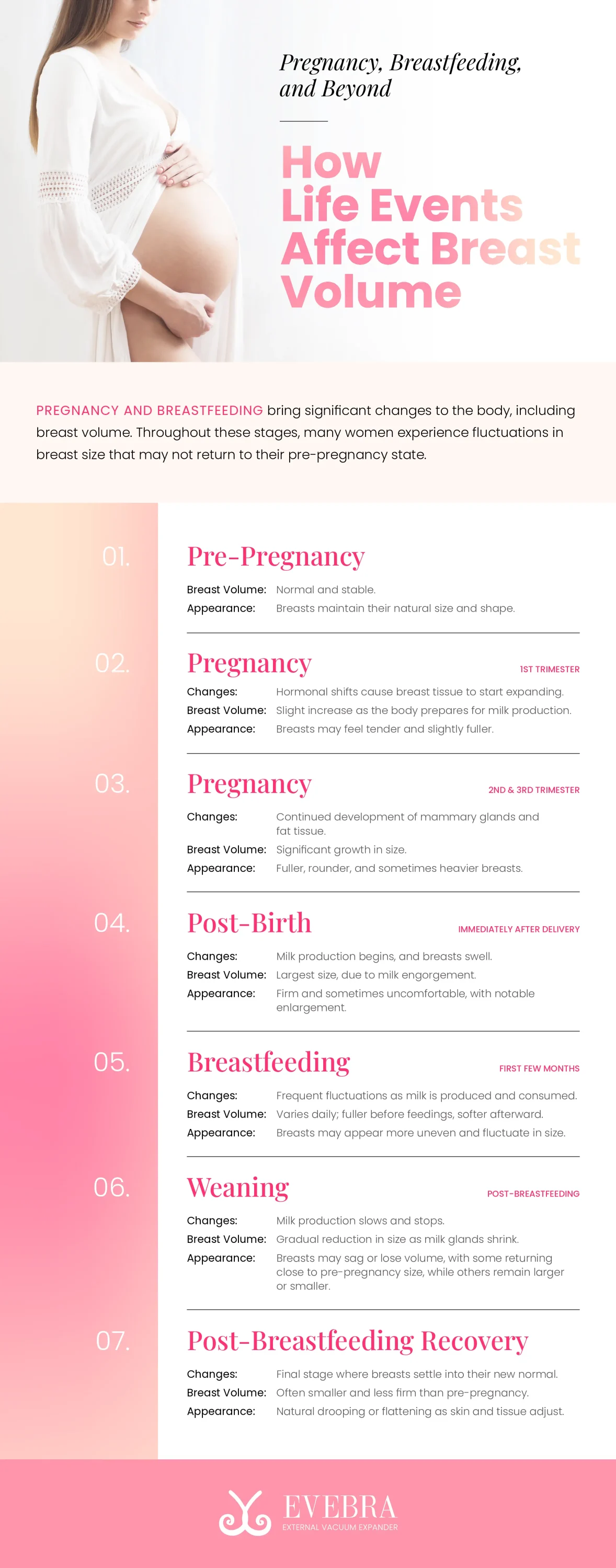


Breast changes are one of the first physical signs of pregnancy and continue evolving throughout motherhood. As the body prepares to nourish a baby, breast size, shape, and structure shift significantly. These transformations, while sometimes unexpected, are completely natural and part of the body’s incredible ability to adapt.
In early pregnancy, hormonal changes trigger the expansion of milk ducts and an increase in breast size. Many women experience tenderness and swelling as progesterone and estrogen levels rise. Some may notice only mild growth, while others see a more pronounced increase in volume.
As pregnancy progresses, the mammary glands develop further, and the breasts continue to grow. Increased blood flow can make veins more visible, and skin stretching may lead to stretch marks. These changes set the stage for milk production after birth.
Following childbirth, lactation brings a new phase of breast transformation. The breasts become engorged as they fill with milk, often feeling firm and heavy. Throughout breastfeeding, their size fluctuates depending on feeding patterns, typically feeling full before a nursing session and softer afterward.
Once breastfeeding ends, the body gradually stops producing milk, and the breasts adjust accordingly. Some women find their breasts shrink back to pre-pregnancy size, while others notice a looser or less firm appearance. These post-breastfeeding changes vary widely among individuals and depend on factors such as skin elasticity and overall breast composition. Understanding some women may want to return to their original form, they will search for brands to shop breast enlargement pumps to aid along their recovery journey.
Recognizing and understanding these changes can help women appreciate their body’s resilience. Pregnancy and breastfeeding bring remarkable transformations, each a testament to the body’s role in nurturing new life.
For further details on breast changes throughout motherhood, see the accompanying resource.